
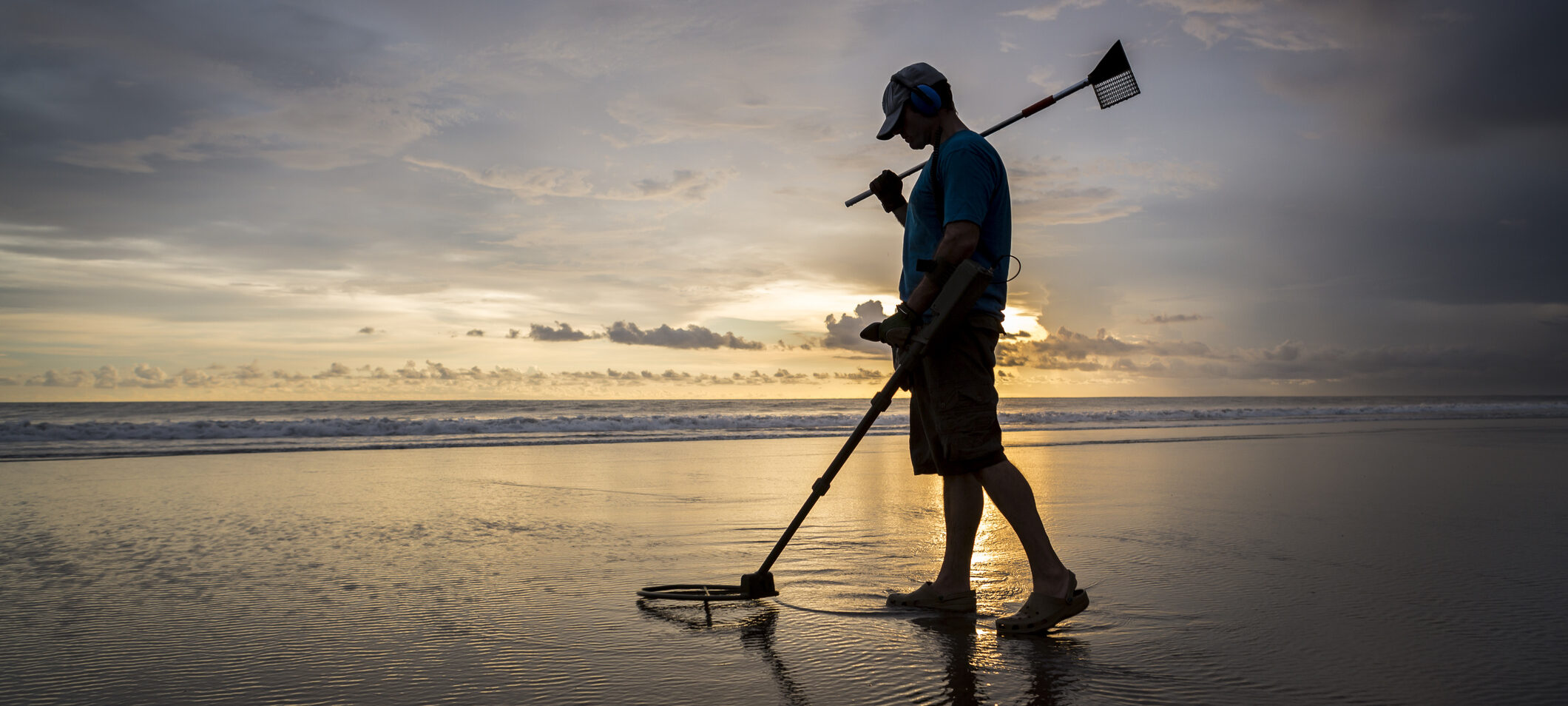
There is something I’ve kept mostly to myself over the years—partly out of embarrassment, partly because it doesn’t quite fit the image of a bustling head of school. But here it is: I enjoy metal detecting on the beach. Cindy giggles as I load up with batteries, SPF, and my shovel and head off. When we married, we exchanged $32 Claddagh rings—romantic in spirit, if not exactly extravagant, only a step above a Cracker Jack prize—and I think she’s quietly convinced that one day I’ll come home from a long walk with the diamond I promised her on that day.
Yup, metal detecting. The pastime most commonly associated with retirees in windbreakers, slowly combing beaches at dawn, headphones on, chasing whispers in the sand. It is, by most accounts, an activity for old men and long, quiet shorelines.
And I suppose that’s precisely why I like it.
I have never found anything of value. I find parts of washed-up lobster traps, lost fishing lures, and spent shell casings from goose hunters. No coins of consequence. No rings returned to grateful owners or the diamond that’s still owed. No relics worthy of a museum case. What I have found, instead, is something far less tangible and, to me, far more meaningful: silence… and solitude.
There is a particular kind of quiet that settles in when you are walking slowly, listening for a sound that may never come. It is a patient quiet. A listening quiet. The kind that asks nothing of you except that you keep moving forward, one careful step at a time.
In a school that is wonderfully full of energy, noise, ideas, laughter, motion, and hope, I have come to believe that this kind of quiet has its own value. It is where we reset. It is where we notice things we might otherwise miss. It is where we remember that not every effort needs to produce a shiny result to be worthwhile.
At Crossroads, we talk often about strong minds and kind hearts. I might add a third, quieter virtue: the ability to be still. To be patient. To listen—even when there is no immediate reward.
My metal detector has yet to uncover treasure. But it has taught me that sometimes the act of searching, without expectation, is its own reward.
And that, I think, is a lesson worth holding onto.